Bee Honeycomb Backgrounds: A Design Asset for Modern Creators
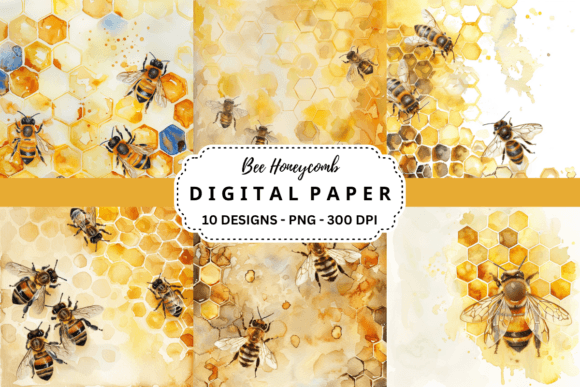
There’s a reason nature has always been a primary wellspring for design inspiration. Organic patterns offer a built-in sense of order, rhythm, and visual interest that feels both timeless and fresh. The honeycomb, with its perfect hexagonal tessellation, is a standout example. It’s a pattern that speaks to efficiency, community, and intricate beauty. For designers and creators seeking to inject this natural elegance into their work, a versatile digital asset like Bee Honeycomb Backgrounds can be a transformative tool. This isn't just another set of patterns; it's a curated collection of high-resolution PNG files designed to serve as a foundational layer for a multitude of creative projects.
Understanding the Visual Appeal and Versatility
Each file in this collection provides a clean, high-contrast interpretation of the classic honeycomb structure. The visual personality strikes a balance between geometric precision and organic warmth. The lines are crisp, rendered at a professional 300 DPI, ensuring they hold up beautifully in both digital and print formats. The substantial 3600 x 3600 pixel dimension means these backgrounds won't pixelate, even when scaled for large-format projects like event banners or trade show posters. The color palette typically leans towards natural golden yellows, ambers, and earth tones, though the PNG format allows for easy recoloring to match any brand guideline. This adaptability makes the asset far more than a one-note design element.
The true strength of Bee Honeycomb Backgrounds lies in their chameleon-like ability to adapt to a project's tone. Used subtly as a watermark, it can add a layer of sophisticated texture to a business card. Scaled up and made prominent, it becomes a bold, energetic backdrop for a fitness brand's social media campaign. For a local apiary or a sustainable product line, it instantly communicates authenticity and a connection to nature. For a tech startup, it can symbolize interconnectedness, networks, and complex systems. This duality—being both natural and structural, delicate and strong—is what makes it such a powerful design asset for professionals across industries.
Strategic Applications Across Creative Projects
For entrepreneurs and small business owners, branding is everything. These honeycomb patterns offer a unique way to build a cohesive brand identity. Imagine a bakery using a subtle honeycomb texture on its packaging labels, website headers, and loyalty cards. The repetition builds instant recognition without being overly literal. Marketers can leverage the pattern's inherent energy for social media graphics. A hexagonal grid is perfect for creating visually appealing photo grids, showcasing multiple product features in a single post, or framing promotional text in a way that feels dynamic and modern.
The applications extend deeply into the realm of editorial and publishing design. A magazine article on architecture or sustainable living could use a muted, desaturated honeycomb as a background for pull quotes or sidebars, adding depth without distracting from the text. For scrapbookers and crafters, the digital files are a dream. They can be printed onto cardstock for invitations, used as a layered element in digital scrapbooks, or even printed on fabric for custom quilting projects. The commercial license typically included with such assets opens the door for print-on-demand designs, allowing creators to develop and sell products like phone cases, tote bags, and posters featuring the pattern.
Practical Guidance for Implementation
Integrating a new design asset effectively requires a thoughtful approach. First, consider the project's primary goal and audience. Is the aim to appear luxurious, playful, rustic, or technical? The honeycomb pattern can be styled to support all these perceptions, but the execution matters. For a high-end skincare brand, you might overlay a translucent gold honeycomb on a deep navy background. For a children's party invitation, you could use a brighter, more playful color scheme with rounded edges.
Font pairing is a critical consideration when using a strong background pattern. To maintain readability, pair the busy background with clean, highly legible typefaces. A bold sans serif font for headlines and a simple serif font for body copy often work well, as their simplicity contrasts with the complexity of the background. Avoid overly decorative script fonts or detailed handwritten fonts for large blocks of text, as they can become lost. The goal is to create a clear visual hierarchy where the message remains front and center.
Before finalizing any design, always test the asset in context. View a mock-up of your social media graphic on a phone screen. Print a test sheet of your invitation at home. Check the contrast between your text and the background under different lighting conditions. This practical testing is where you move from theory to a polished, professional result. The high resolution of these files gives you the flexibility to make adjustments—scaling, cropping, changing opacity, or applying filters—without sacrificing quality. By treating Bee Honeycomb Backgrounds as a versatile component in your larger design toolkit, you unlock its potential to elevate projects from ordinary to memorable, grounding your work in a pattern that is both deeply familiar and endlessly adaptable.